
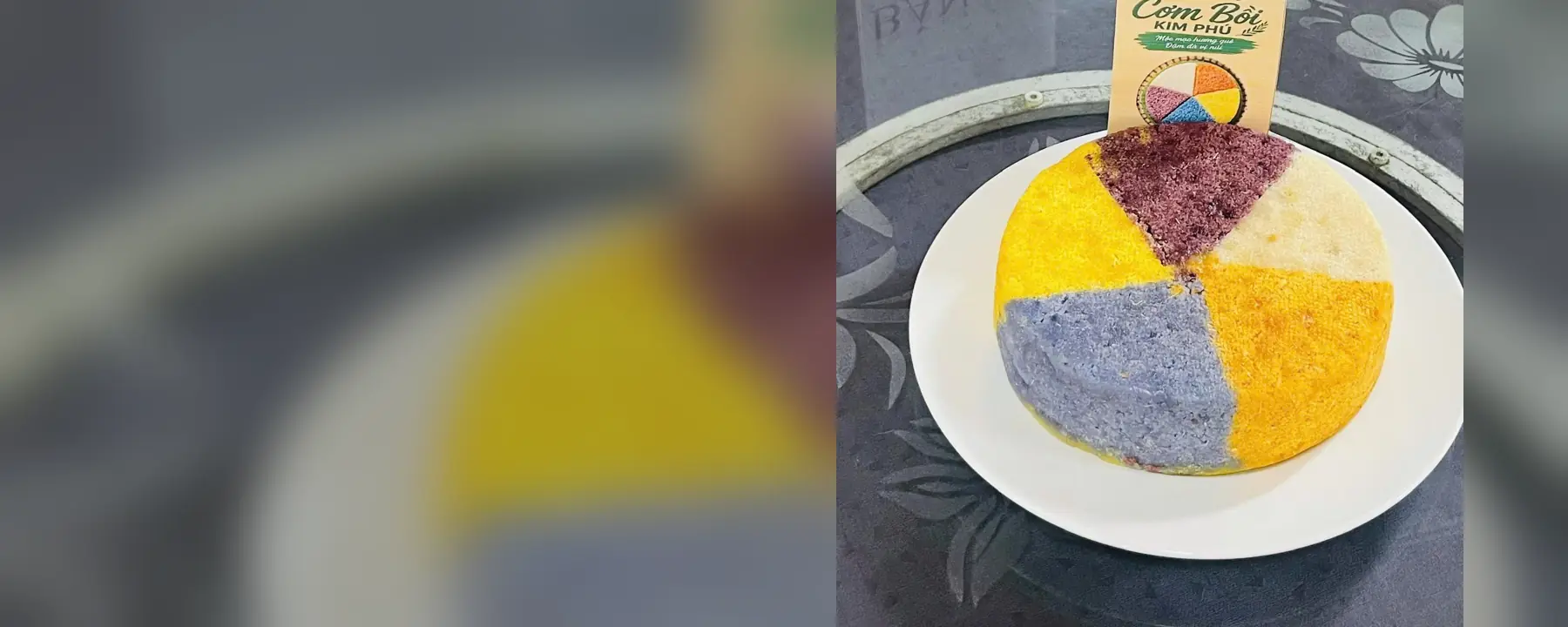
 Photo: Cơm Bồi Kim Phú
Pồi, also called cơm bồi, is the everyday staple, in place of rice, of the Nguồn people of Tân Hóa village and the old Minh Hóa district, now Kim Phú. In limestone country there is little paddy land but plenty of corn and cassava on the hillsides, so the “rice” here is made from corn.
What is pồi made of, and how?
The afternoon before, corn is soaked in boiling water and covered until the kernels swell. At dawn it is pounded into flour, sifted, spread thin on a small tray under fresh banana leaves, and steamed. Some families mix in pounded cassava.
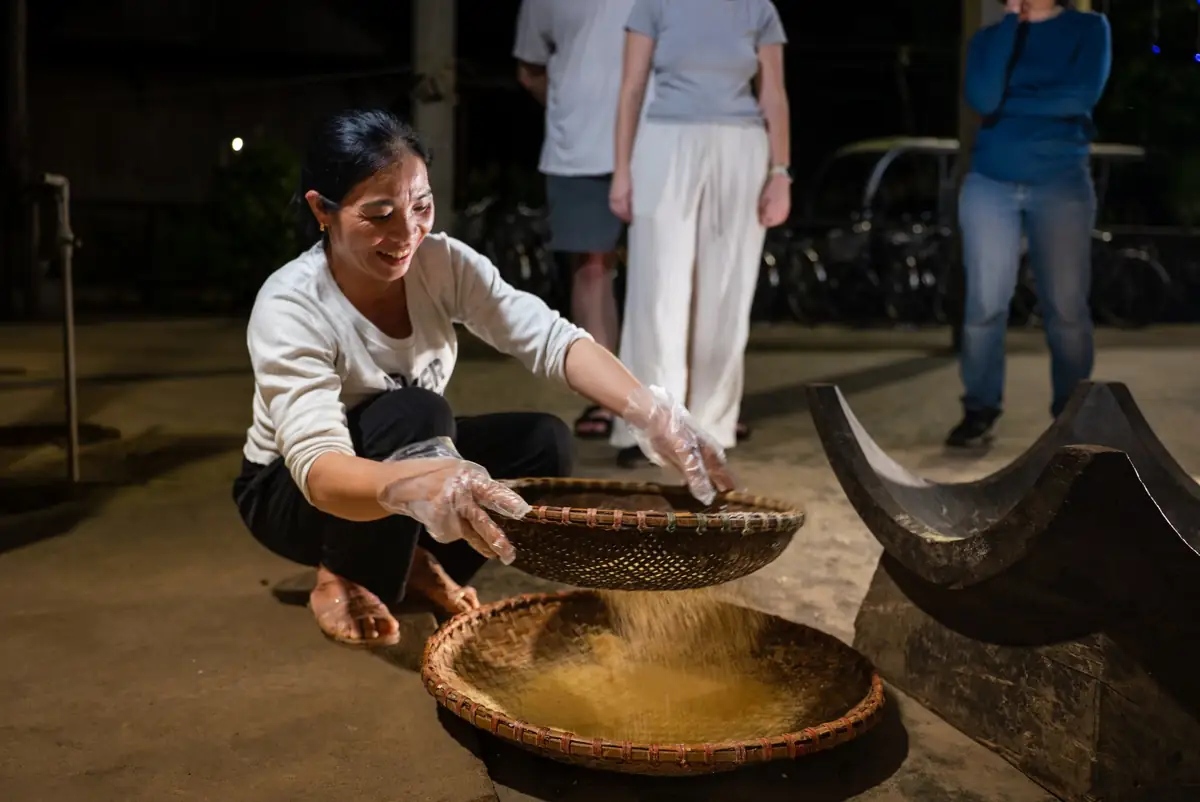
How do you eat it?
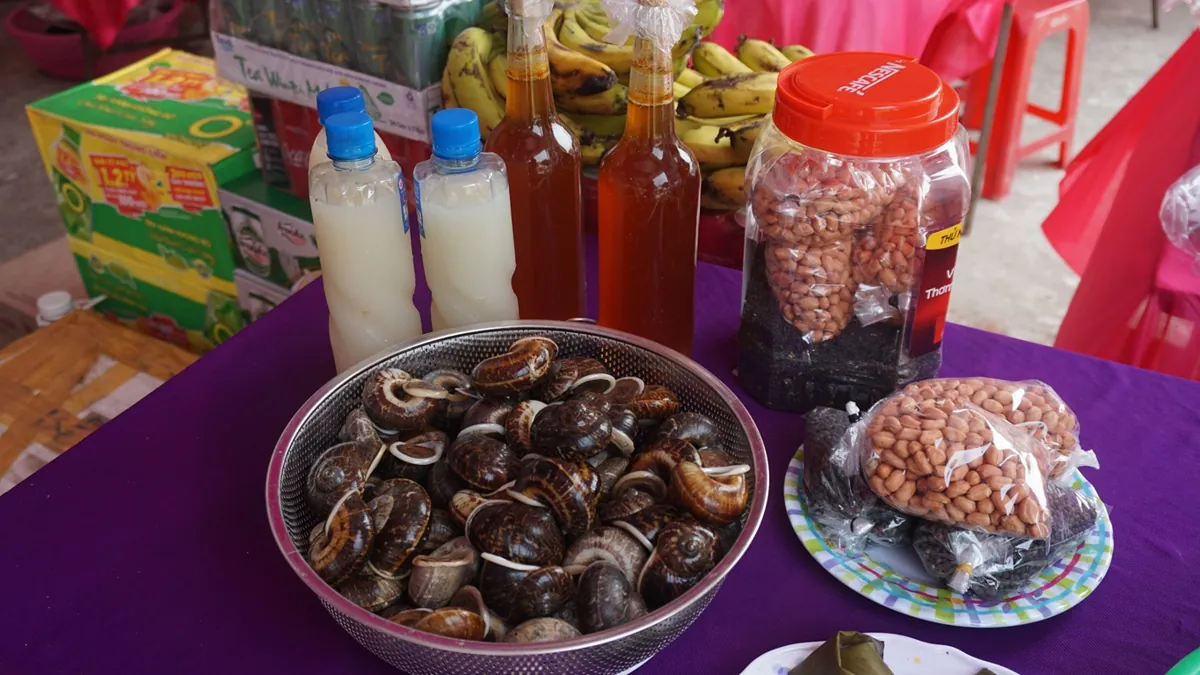
Cooked pồi is light and soft, with a plain, earthy taste of corn. Its shape depends on each family’s steamer. It is eaten with wild-greens soup cooked with stream fish, a plate of boiled lèn snails, or simply dipped in salt pounded with chilli and wild lime leaf.
Pồi at a Nguồn table
At big meals, especially with several generations at the table, people roll pồi into small balls and pass them to one another as they talk. At Minh Hóa’s Third Full Moon festival it is always the signature dish on sale. To understand a Nguồn meal in Tân Hóa, start with a handful of pồi.
Cơm bồi from Kim Phú today
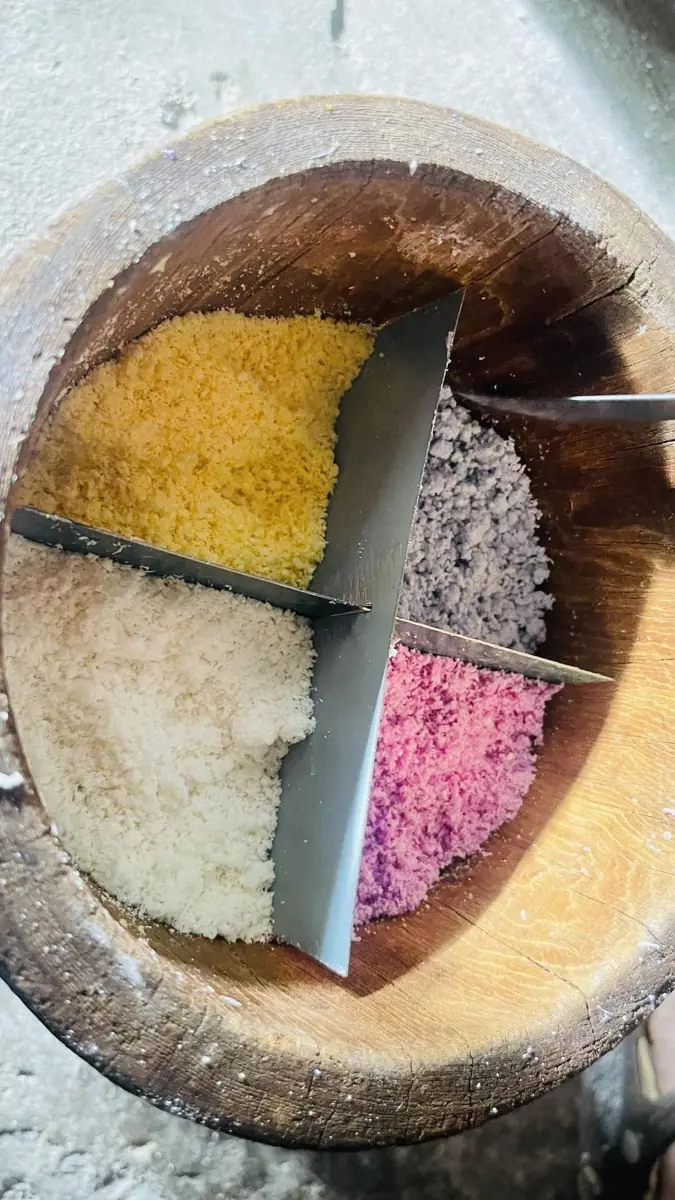
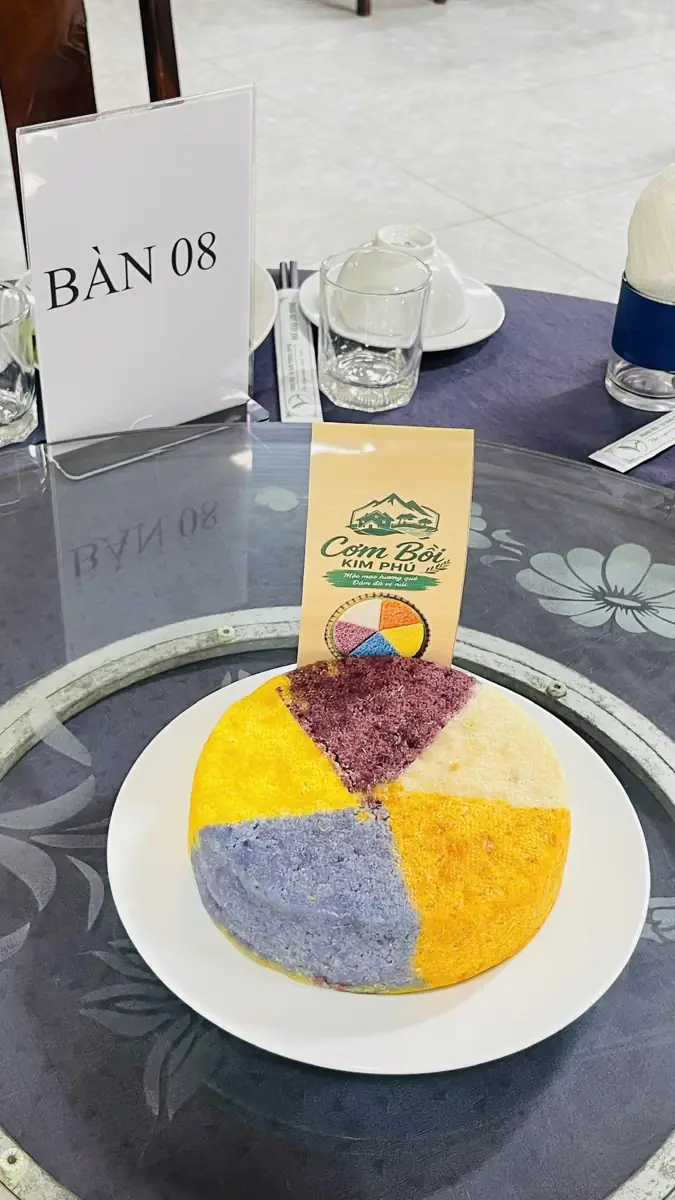
From the Nguồn people’s everyday staple, Kim Phú’s cơm bồi has been reinvented. The flour is divided into several colours, packed into a mould with dividers and steamed over a wood fire; it comes out as a round cake of coloured wedges. Sold as Cơm Bồi Kim Phú (some labels read “Pồi Kim Phú”), it is packed and labelled, and is now served to visitors around Phong Nha – Kẻ Bàng.
Where to try Pồi in Kim Phú
Most local dishes are on no restaurant menu. The surest way is to book dinner with a home cook in Tân Hóa village (200,000 VND per person, book at least a day ahead) and ask for Pồi. Many dishes are seasonal, so your host will tell you what is available. Staying the night? Ask your homestay host when you book.
Making the multicoloured cơm bồi
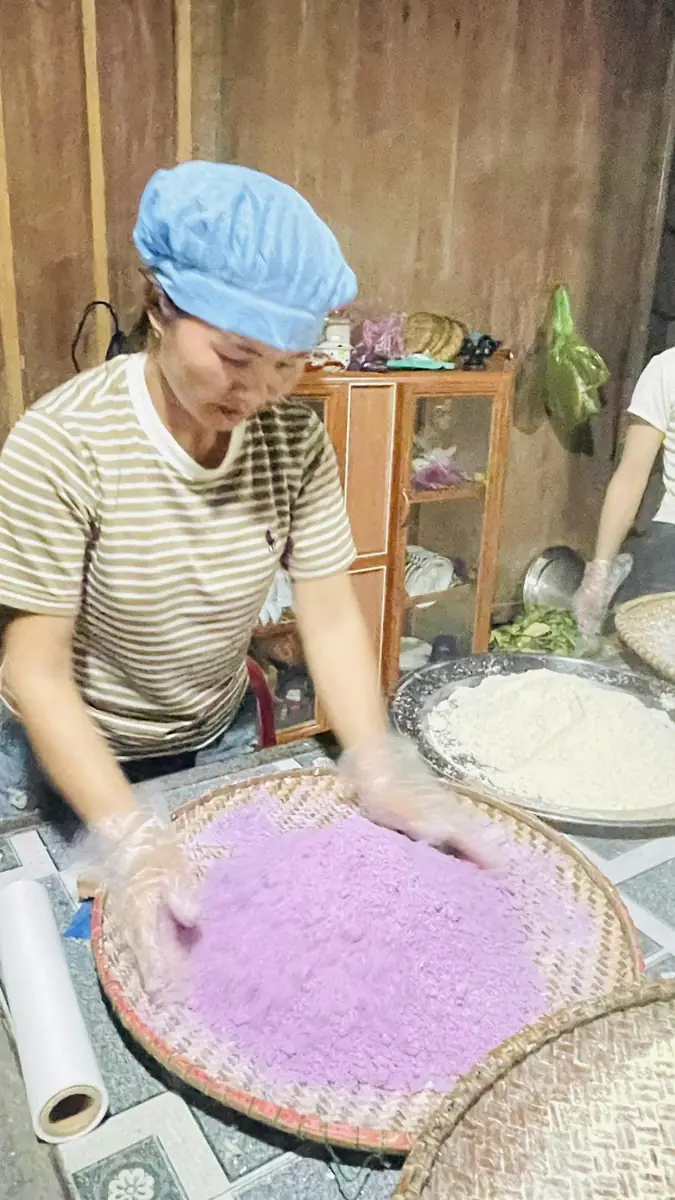
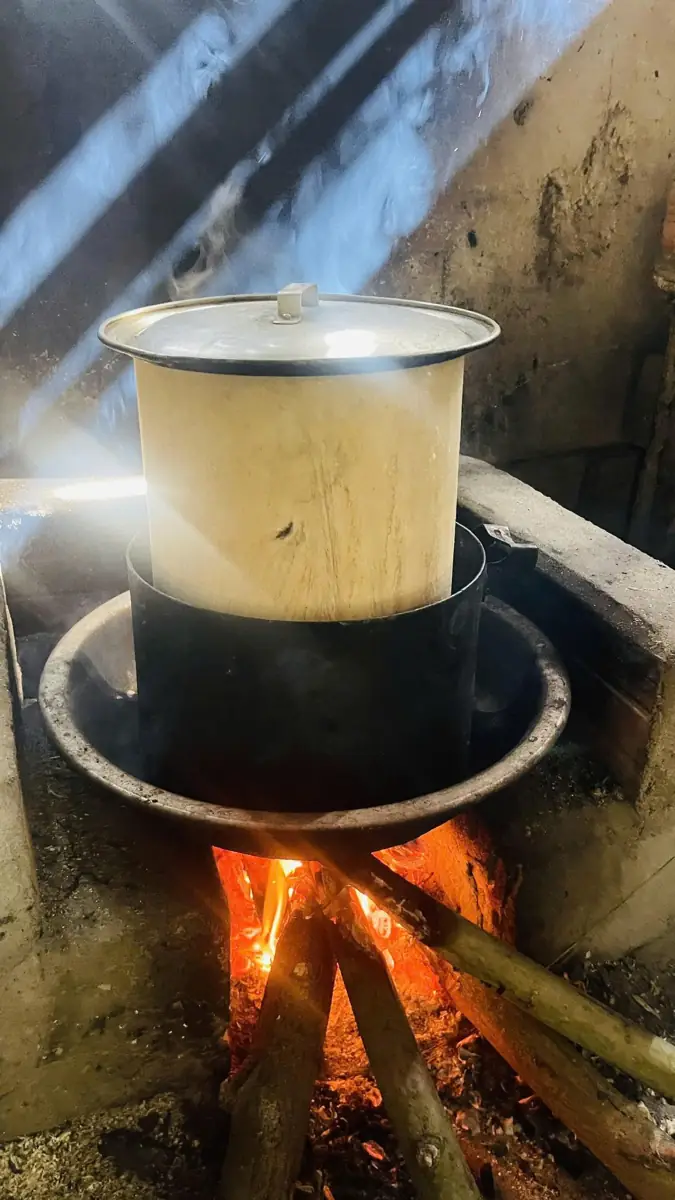
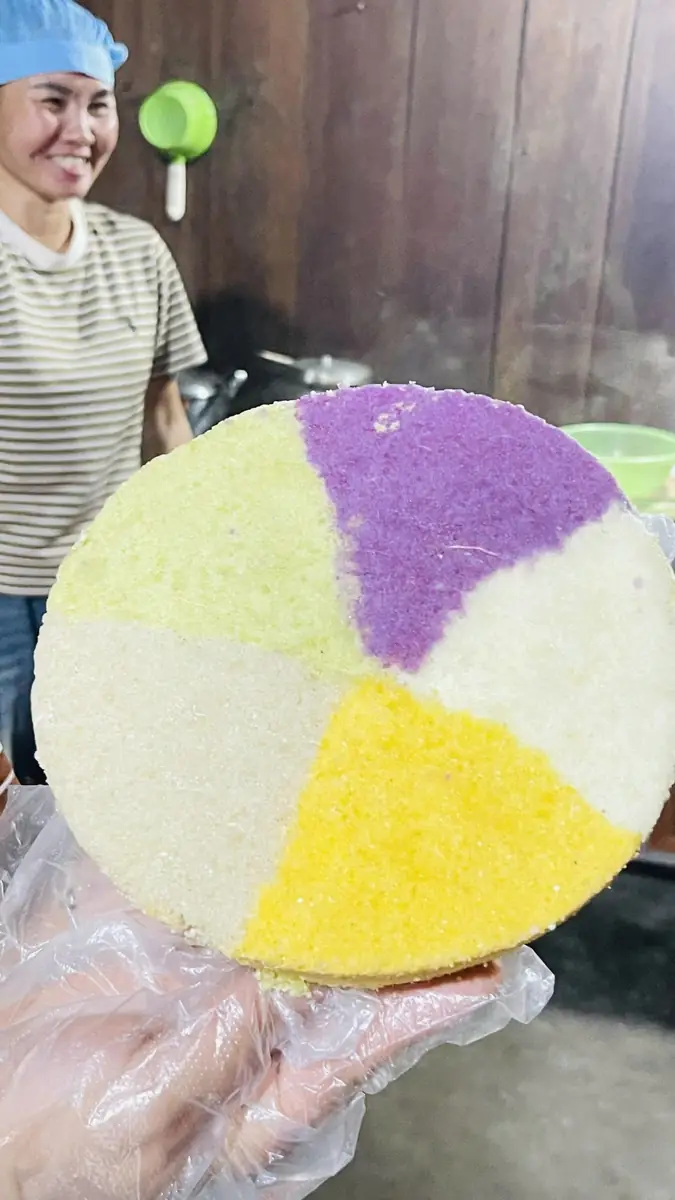
Photos: Cơm Bồi Kim Phú
- Ngô
- the base, sometimes with cassava
- Hấp
- steamed
- Người Nguồn
- a Nguồn tradition
Try this
- Eat it hot, rolled into balls by hand like the villagers do
- Dip it in salt with chilli and wild lime leaf
- Pair it with wild-greens fish soup and boiled snails
More Kim Phú dishes
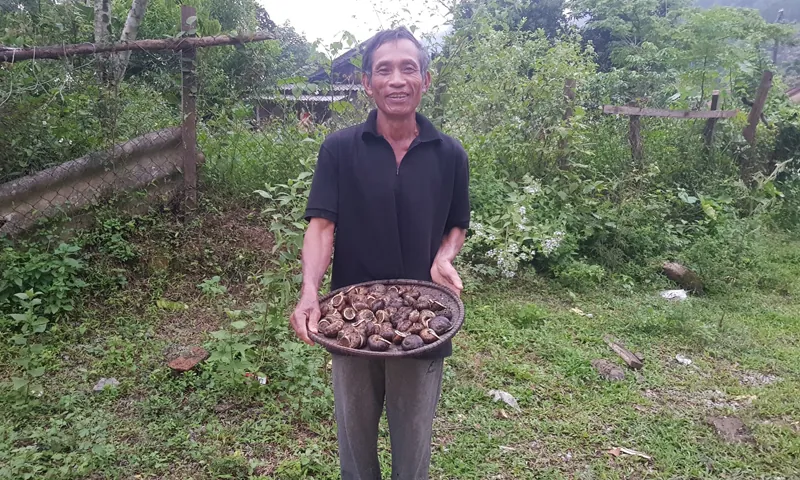 From the limestoneỐc lènA snail that lives on the mountain, not in the water.
 From the Rục peopleRượu đoác (đoác wine)A wine that is never distilled, drawn from the top of a forest palm.From the forest · March–MayTrứng kiếnAnt eggs hunted in the forest each spring: rich, and best in a sour soup with lá bún.From the stream banksLá búnA sour wild leaf from the stream banks, pickled before cooking, with an aroma all its own.From the nestNhộng ongThe pupae of the forest’s fiercest wasp, turned into a home-cooked treat.