
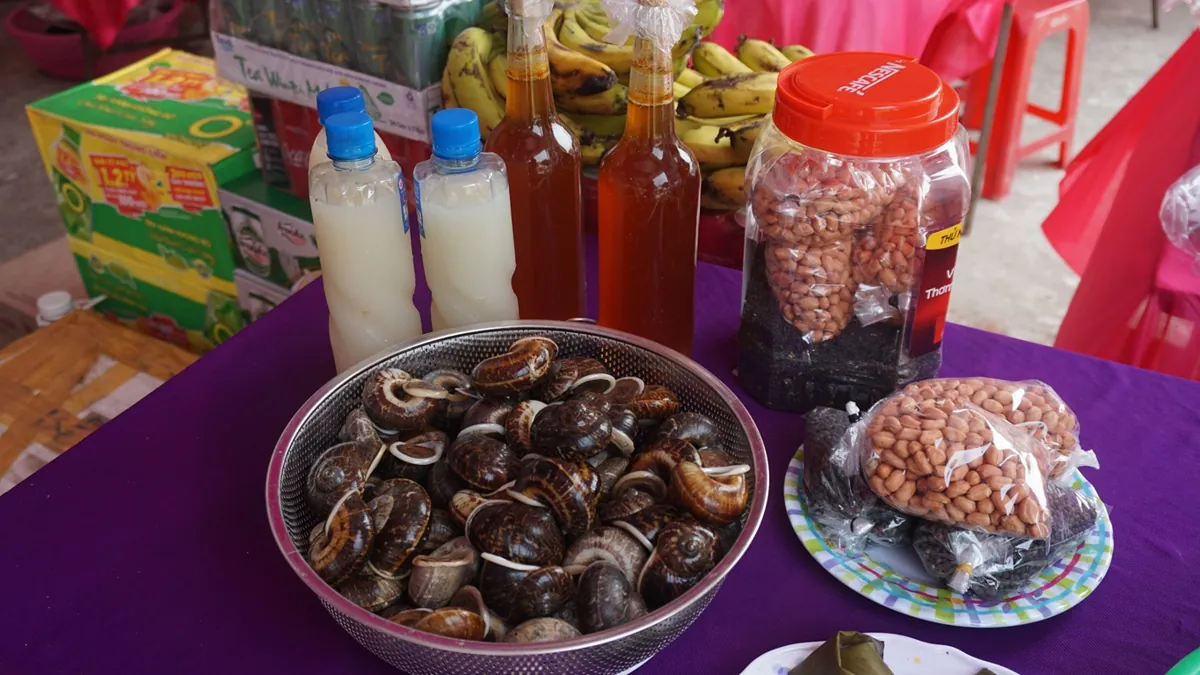
Food / From the nest
Nhộng ong
The pupae of the forest’s fiercest wasp, turned into a home-cooked treat.
Nhộng ong in Kim Phú are the pupae of the vò vẽ, the forest’s fiercest wasp, turned into a home-cooked treat that families save for honoured guests.
What are vò vẽ wasp pupae?
The mountains of western Quảng Trị have long kept bees and wasps: honeybees for honey, and the hornet-like vò vẽ wasp for its pupae. Vò vẽ are famously aggressive. Villagers bring nests in from the forest, hang them around their gardens, and when the nest is full they harvest it in full protective gear. If your host has a nest in the garden, ask to see it, from a distance.
How are they cooked?
The pupae are ivory-white and rich. They are pan-roasted with lime leaves, stir-fried, or made into a salad; around Minh Hóa, wasp-pupae salad counts among the signature dishes of the uplands.
How much do they cost?
They fetch a good price, several hundred thousand đồng a kilo, so families save them for honoured guests. They are seasonal, so ask your host when you book a meal.
Where to try Nhộng ong in Kim Phú
Most local dishes are on no restaurant menu. The surest way is to book dinner with a home cook in Tân Hóa village (200,000 VND per person, book at least a day ahead) and ask for Nhộng ong. Many dishes are seasonal, so your host will tell you what is available. Staying the night? Ask your homestay host when you book.
You can also find it at Quán ăn Ánh Tuyết, Nhà hàng Cường Nhi on the Hồ Chí Minh Road, and at other restaurants and eateries in the commune; see the restaurant list for phone numbers.
- Vò vẽ
- the wasp raised for pupae
- Rang · xào · gỏi
- how it’s cooked
- Theo mùa
- ask ahead
Try this
- Try pupae pan-roasted with lime leaves
- Ask to see a vò vẽ nest in the garden (from a distance!)
More Kim Phú dishes
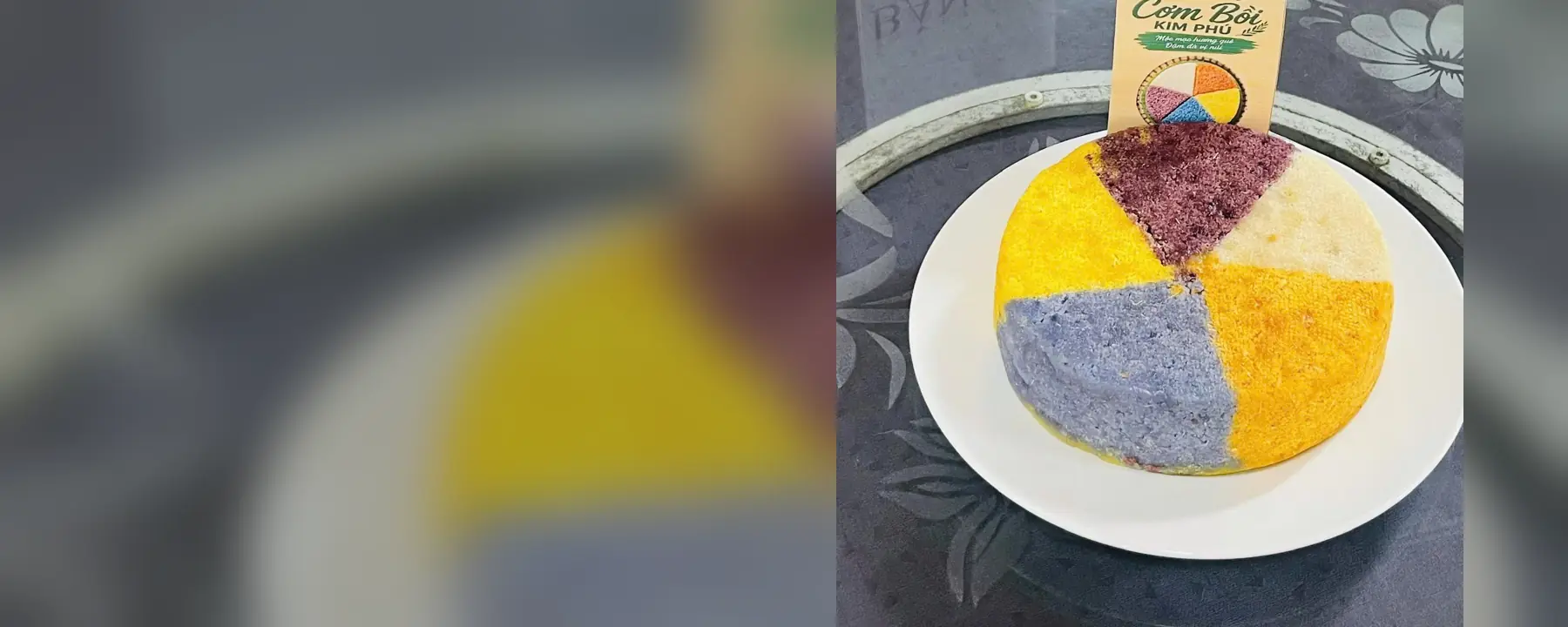 From the hill fieldsPồiThe “rice” of the Nguồn people, made from corn and cassava.
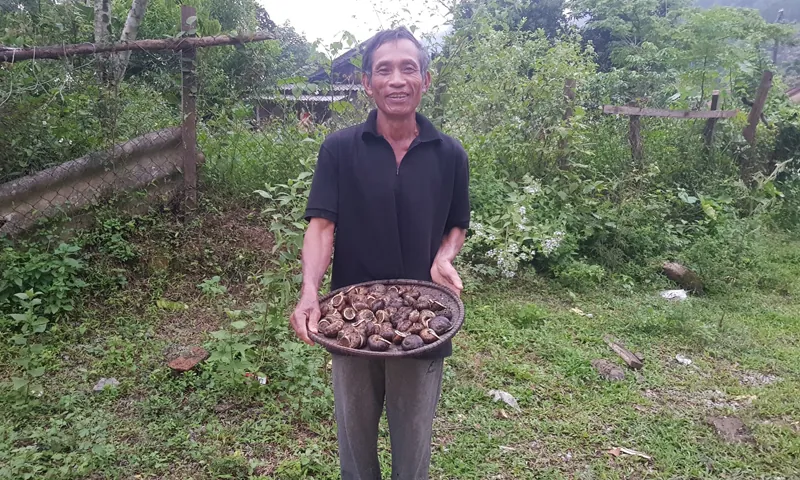 From the limestoneỐc lènA snail that lives on the mountain, not in the water.From the Rục peopleRượu đoác (đoác wine)A wine that is never distilled, drawn from the top of a forest palm.From the forest · March–MayTrứng kiếnAnt eggs hunted in the forest each spring: rich, and best in a sour soup with lá bún.From the stream banksLá búnA sour wild leaf from the stream banks, pickled before cooking, with an aroma all its own.